

An interesting conversation is taking shape in Bauchi State. It is not, at least not yet, the familiar theatre of defections, alignments, and zoning arithmetic that tends to dominate Nigerian political cycles. The major question being raised is quieter, but far more consequential.
What kind of leadership does Bauchi actually need next?
After years in which potential has persistently outrun performance, the state stands at a point where that question can no longer be deferred. Should the next governor emerge from the well-worn ranks of career politics, or from a different tradition entirely, one shaped by systems, delivery, and measurable outcomes?
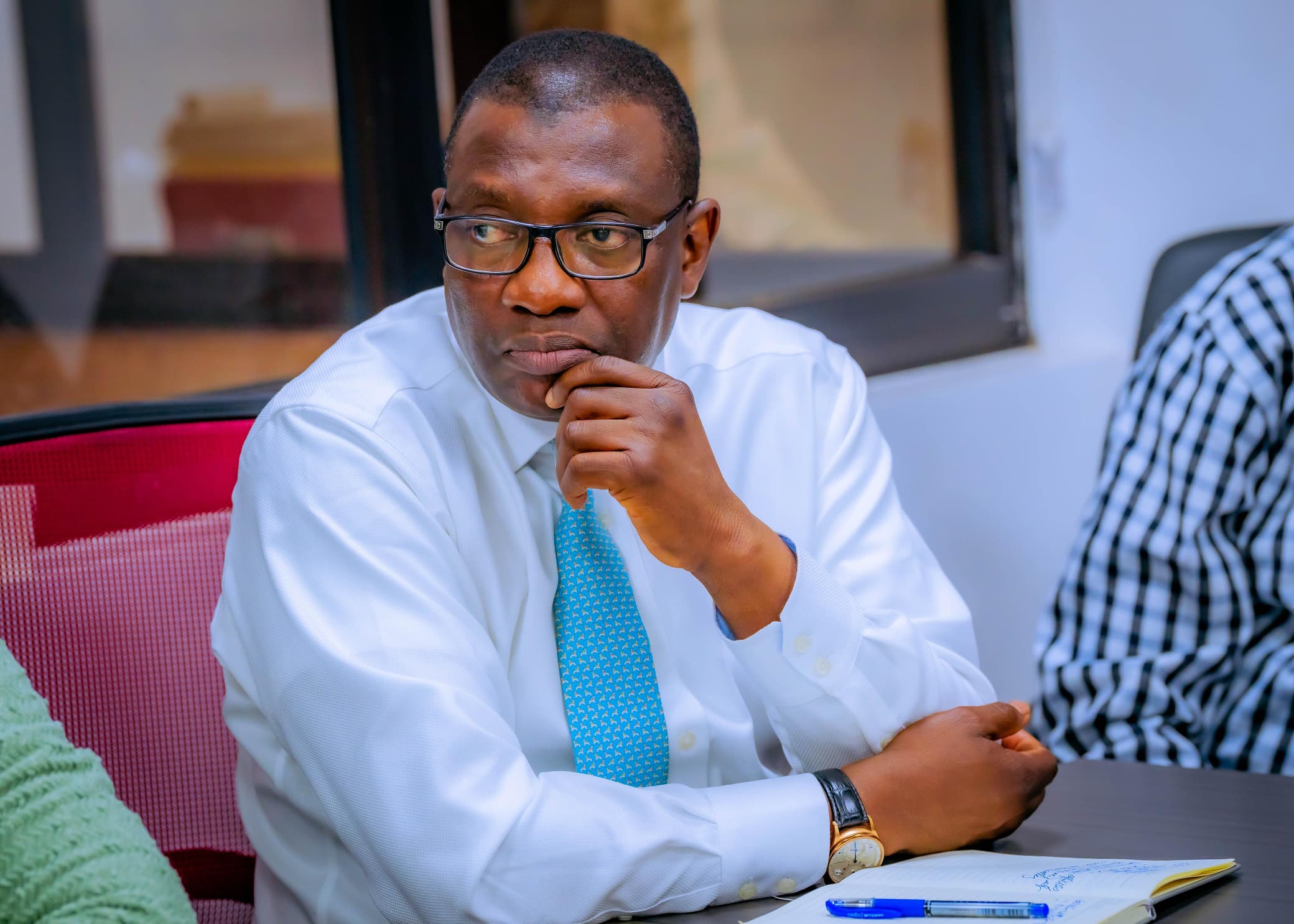
It is within this context that the name Dr Bala Maijama’a Wunti has begun to circulate with increasing seriousness.
Not by accident. And not without reason.
His story does not begin in the corridors of power. It begins, as many consequential Nigerian stories do, in circumstances that offered little by way of advantage.
Born in 1966 in Wunti , he lost both parents by the age of five and was raised by an uncle within a community that demanded resilience rather than indulgence.
Education became the pathway forward. A degree in Chemistry from Ahmadu Bello University. Further qualifications in Marketing and Management from Abubakar Tafawa Balewa University in Bauchi. Then Harvard and Oxford Business Schools. Each step less an ornament than a necessity, earned under conditions that did not permit complacency.
The career that followed unfolded over three decades within Nigeria’s most complex public enterprise, the Nigerian National Petroleum Company Limited.
It is easy to list the positions. Production Programming Officer at Eleme Petrochemical Complex. Head of Market Research at Brass LNG. Senior Adviser to 5 different Group Managing Directors of NNPC. General Manager of the Efficiency Department. Chief Planning and Strategy Officer of NNPC. Managing Director of the Petroleum Products Marketing Company. Group General Manager of NAPIMS. Chief Upstream Investment Officer at NUIMS. Chief Health, Safety and Environment Officer.
Titles, in isolation, can be misleading. What matters is what they required.
These roles involved managing national assets measured in billions, negotiating with global oil majors whose interests are neither casual nor charitable, and operating under scrutiny that is both domestic and international. They required, above all, an ability to distinguish between activity and outcome.
Consider the intervention at PPMC.
At a time when fuel scarcity had become an almost seasonal ritual, he conceptualised and was tasked with leading Operation White, a significant inter-agency transparency initiative designed to track product movement and dismantle entrenched inefficiencies. The introduction of digital monitoring did more than improve oversight. It forced a recalibration of assumptions. Reported consumption figures dropped significantly. Supply chain visibility improved. Leakages narrowed. For once, availability began to align more closely with expectation.
The template was simple: identify the problem, measure it, and fix the system that produced it.
It was not a miracle. It was management.
The scale expanded further at NAPIMS and NUIMS, where the stakes moved from distribution to upstream investment and production.
Here, the work became more technical, but no less consequential. Joint venture portfolios had to be managed with fiscal discipline. Production targets had to be met in an environment complicated by theft, vandalism, and shifting global energy dynamics. Long-standing disputes, some stretching back decades, required resolution.
Under his watch, crude oil production rebounded within key cycles, supported by a coordinated security architecture and strengthened operational oversight. This performance culminated in the attainment of 1.84 million barrels per day in December 2024, representing the highest output in recent years. This milestone earned Wunti a formal recognition, in addition to an earlier Ministerial Award for exceptional performance in delivery.
Projects that had lingered in planning stages moved into execution. The Soku optimisation. The Asa-Rumuekpe line. The Anyala and Madu developments. Kolmani Integrated Development Project. The Bonga North FID. Ubeta Gas Development FID. Each represents not just activity, but output. Each required someone who could distinguish between motion and progress.
Equally significant were the disputes that did not escalate.
The renegotiation of deepwater Production Sharing Contracts, long trapped in technical and legal deadlock, helped avert liabilities of over $10 billion that could have cost the country dearly. The resolution of the Escravos Gas-to-Liquids dispute followed a similar pattern. These were not headline-grabbing interventions, but they mattered precisely because of what they prevented.
Loss.
Internally, reforms were embedded with a view to longevity rather than immediacy. International certifications in quality management and business continuity were secured. Cost optimisation measures drove operating expenses down. Strategic initiatives aimed at reducing import dependence and expanding domestic gas utilisation were advanced. And perhaps most notably, he led the restructuring and transition of NNPC into a commercially oriented entity under the Petroleum Industry Act, a reform that had eluded successive administrations.
There is a pattern here.
It is the pattern of a technocrat who operates within systems and attempts, however imperfectly, to make them work.
Outside the formal structures of government, a parallel record of engagement exists through his Wunti Al-Khair Foundation which has delivered Community support interventions, from education to healthcare to skills development, sustained with little fanfare.
What is notable is the consistency between personal narrative and public intervention. The arc, such as it is, holds.
All of this brings us back to Bauchi.
The state is not lacking in endowments. Arable land stretches across vast expanses. Solid mineral deposits remain underutilised. Yankari continues to offer tourism potential that is more discussed than realised. A youthful population waits, as young populations tend to do, for pathways into productivity.
Yet the indicators tell a more sobering story. Revenue remains constrained. Health outcomes lag behind national averages. Employment opportunities have not kept pace with demographic realities. The gap between what is possible and what is delivered has become familiar enough to risk acceptance.
That gap is not ideological. It is managerial.
Which raises a straightforward question.
What does it take to close it?
Political experience has its place. It helps in navigating constituencies, building consensus, and managing the inevitable frictions of governance. But governance itself, stripped of all theatre, is a different enterprise. It is about budgets that balance, projects that are completed, institutions that function, and decisions that produce measurable results.
It is, in essence, about execution.
The argument for a figure like Wunti rests on that distinction. Not as a rejection of politics, but as an attempt to rebalance it with competence drawn from outside the traditional political pipeline.
Whether that argument ultimately persuades the electorate is another matter entirely. Elections are rarely decided on paper alone. They respond to emotion, identity, structure, and timing in ways that often defy tidy analysis.
But it would be a mistake to dismiss the conversation now emerging.
Bauchi, like many states, has spent years discussing its possibilities. The next phase may well depend on how seriously it begins to interrogate its requirements.
Not in slogans. Not in familiar alignments.
But in terms of what has been built, what has been managed, and what can reasonably be delivered.
In that assessment, technocratic experience will inevitably come into sharper focus.
And when the moment arrives for a decision, the question may not be who speaks most persuasively about the future, but who has spent the better part of a career quietly learning how to make complex systems work.
That is a different kind of qualification.
Dr Bala Maijama’a Wunti represents that qualification.
And it is one that Bauchi may find increasingly difficult to ignore.
Prof Goni, a political commentator, writes from Kaduna.