

By James Bamgbose
For as long as people have existed, the question of God has never really gone away. It finds expression in quiet reflections and in defining moments of history, where outcomes seem to rise beyond human effort alone. Across communities, there is a shared understanding that life is not governed by chance, but by a higher order that gives direction and meaning. In times when events align with unusual clarity, many see not just coincidence, but the hand of divine orchestration, guiding paths in ways human planning alone cannot fully explain.
This understanding becomes even stronger when we consider the limits of human control. No matter how strategic or determined people may be, there are outcomes that simply defy manipulation. Time, circumstance, and destiny often move in ways that remind us of a higher authority at work. It is within this reality that faith takes root, not as mere belief, but as recognition. And when a situation begins to reflect that sense of divine alignment, opposition does not just struggle politically; it struggles against a perception that what is unfolding is already settled beyond human interference.
It is from this standpoint that the current political climate in Ila Federal Constituency is being quietly interpreted. There are moments in public life when events unfold in ways that go beyond human planning. Moments when outcomes seem guided by something higher than political strategy or personal ambition. In Ila Federal Constituency today, many people see the unfolding reality through that lens. It is not just about campaigns or calculations; it is about a journey that appears divinely ordered. And when a path is believed to be shaped by God, it naturally becomes difficult, if not impossible, for opposition to gain real ground.
Across Boluwaduro, Ifedayo, and Ila Local Government, there is a growing sense of calm certainty. Not the usual tension that comes with election cycles, but a shared feeling that the direction of leadership is already settled. It is this belief that has steadily shaped the political atmosphere ahead of 2027 in the Federal Constituency.
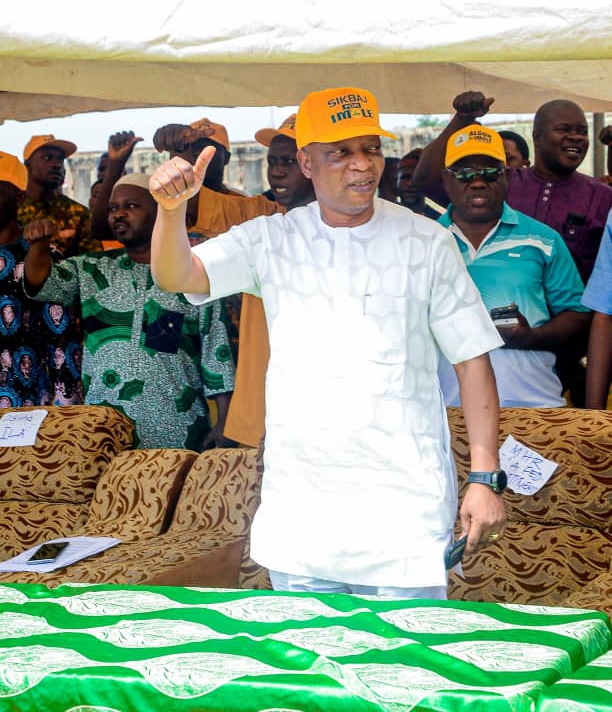
So, rather than the usual build-up of rivalries and permutations, what is emerging is something different, an acceptance that “Olohunwa is OKAY”. People are not asking who next? They are reflecting on what has been done and who has done it well. In that reflection, a name continues to stand out: Hon. Ademola Clement Akanni (Olohunwa). His journey is no longer being measured by promises, but by results that people can see and point to.
What makes all of this more significant is the contrast with what existed before. Prior to his emergence, Ila Federal Constituency struggled with visible neglect. Basic infrastructure was lacking, and many communities felt cut off from meaningful representation. Roads were left unattended, access to clean water was inconsistent, projects were diverted, and empowerment initiatives were either minimal or non-existent.
There was also a lingering sense that the constituency was not getting its fair share. Many residents felt governance was happening elsewhere, not where they could see or benefit from directly. That gap between the people and their representative created frustration.
Olohunwa’s tenure has changed that narrative. Representation has become something people can feel and can see in their communities and experience in their daily lives. The difference is not theoretical; it is practical and visible.
In less than 3 years at the National Assembly, Olohunwa has built a record that speaks directly to the needs of his people. His style of representation has been practical and people-focused, less about noise, more about impact. One of the most visible aspects of his work has been empowerment. Farmers across the constituency have received training, financial support, and modern equipment to improve their output. For many, this has meant not just better harvests, but a more stable source of income.
He has also paid attention to vulnerable groups (widows, widowers, youths, and women) ensuring they are not left behind. Through vocational training and direct cash support, many have been given a second chance at economic independence. These are not abstract programs like Ijesha North Mukusmukus, these are real interventions that have changed lives at the grassroots.
Education has equally felt his touch. Schools have been renovated and furnished, new classrooms constructed, and students supported with learning materials and tuition assistance. At a time when many families struggle with the cost of education, these interventions have provided relief and restored hope. For young people in the constituency, it signals that their future is being taken seriously.
In terms of infrastructure, the changes are hard to miss. No one in the constituency will forget the big wrong doings of the yesterday’s rep that diverted the constituency project to his private residence area in Osogbo. For Olohunwa, communities that once went dark at night now benefit from solar-powered streetlights. Access to clean water has improved through the installation of boreholes across several towns and villages. Roads that were once difficult to navigate have been graded or constructed, making movement easier for residents and boosting local economic activity.
His work has also extended to improving electricity supply, facilitating transformers and pushing for better power infrastructure. In education and skills development, he has supported the establishment of training centres and student accommodation, laying the groundwork for long-term growth. Even in security, interventions like the facilitation of a police station show a recognition of the broader needs of the constituency.
At the legislative level, Olohunwa has not been silent. He has sponsored bills aimed at bringing federal institutions closer to the people with proposals that, if fully realized, will create jobs and open up new opportunities within the constituency.
Beyond projects and policies, there is also the human side of his leadership. From festive support packages to community donations and large-scale feeding programs during Ramadan, he has maintained a connection with the everyday lives of his constituents. These gestures have strengthened the bond between him and the people he represents.
And this is where the conversation about 2027 becomes clearer and louder than there is no contest in the Federal Constituency. Elections are usually about choices, about weighing alternatives. But sometimes, performance narrows those choices so significantly that the outcome begins to look obvious. In Boluwaduro/ Ifedayo/ Ila Federal Constituency today, that is the reality taking shape.
Hon. Ademola Clement Akanni is not just performer; he has raised the bar. The distance between what used to be and what is now is too wide to ignore. And in that gap lies the reason why talk of opposition feels more like formality than substance.
It is not that others cannot aspire to lead, it is that the standard currently on ground demands more than ambition. It demands proof. And at this moment, no one else appears to match the combination of visibility, impact, and connection that Olohunwa has established.
2027, therefore, is not gathering the energy of a fierce political battle. It is gradually taking the shape of a reaffirmation, where the people simply renew a mandate that has already proven its worth. A good term is deserving of another.
Olohunwa. No contest.
- Arákùnrin James Bamgbose writes from Igbajo, and can be reached via bamgbosejames9@gmail.com