

By James Bamgbose
There is a Yoruba proverb that says, “Bi ọkọ ba sọnù, a tún lè rí i; ṣugbọn bí olùdarí ọkọ bá sọnù, irin-ajo náà ti bàjẹ́.” In essence, a lost boat may still be found, but when the captain loses direction, the entire voyage is endangered. Nothing captures the twelve years of the All Progressives Congress (APC) administration in Osun State more accurately than this timeless wisdom.
It was an era marked not merely by governance challenges, but by a persistent absence of direction, vision, and responsible stewardship. It was a period that history will remember as rudderless, one that the people of Osun would never wish to experience again.
Yet, amid those difficult years, one institution remained remarkably committed to democratic principles and public accountability: the opposition party, the Peoples Democratic Party (PDP). Despite witnessing policies that many considered anti-people, despite observing a state weighed down by debt and abandoned projects, and despite enduring political intimidation, the PDP never abandoned its constitutional role as an opposition party. It criticized. It scrutinized. It mobilized public opinion. But it never sought to burn down the house simply because it was not occupying it.
That distinction is important today because Osun people are witnessing two fundamentally different models of opposition politics. One was anchored on democratic responsibility; the other appears increasingly driven by desperation. One sought to offer alternatives; the other appears determined to obstruct governance itself.
Under successive APC administrations, workers battled salary uncertainties, pensioners endured prolonged hardship, infrastructure deteriorated in many areas, and the state’s debt profile expanded significantly. While political propaganda often painted a picture of prosperity, the realities confronting ordinary citizens told a different story.
The consequences of those years did not disappear overnight. Governor Ademola Adeleke inherited a state burdened by financial obligations, abandoned projects, and institutional weaknesses. Yet rather than engage in endless blame games, his administration immediately focused on restoring public confidence through practical governance interventions and measurable reforms.
The rehabilitation of roads across the state, the revitalization of primary healthcare centres, the expansion of social welfare programmes, the settlement of workers’ obligations, and renewed investments in education and infrastructure have become visible markers of a government attempting to rebuild what years of neglect had weakened.
Interestingly, these achievements have not been challenged primarily through superior policy alternatives by the APC. Instead, much of the opposition’s energy appears directed toward creating political controversies, manufacturing crises, and pursuing endless litigation designed to distract governance from service delivery. This is where the contrast becomes impossible to ignore.
When the PDP was in opposition between 2010 and 2022, it faced an APC government that wielded state power and enjoyed significant federal backing at different times. Yet the PDP did not attempt to render the state ungovernable. It did not encourage institutional paralysis. It did not elevate every political disagreement into a constitutional crisis. It remained committed to the democratic process, trusting ultimately that the electorate would decide. That patience paid off.
The people of Osun eventually exercised their democratic right and voted for change on July 16, 2022. The victory of Governor Ademola Adeleke was not the product of judicial manipulation or political conspiracy. It was the outcome of years of public dissatisfaction with APC rule and years of consistent opposition engagement by the PDP.
Ordinarily, a responsible opposition would have accepted that verdict, reorganized itself, developed alternative policy frameworks, and prepared for the next electoral cycle. That is how mature democracies function. Elections are won and lost, but democratic institutions endure.
Unfortunately, what Osun has witnessed since 2022 suggests that the APC has struggled to accept its new reality as an opposition party.
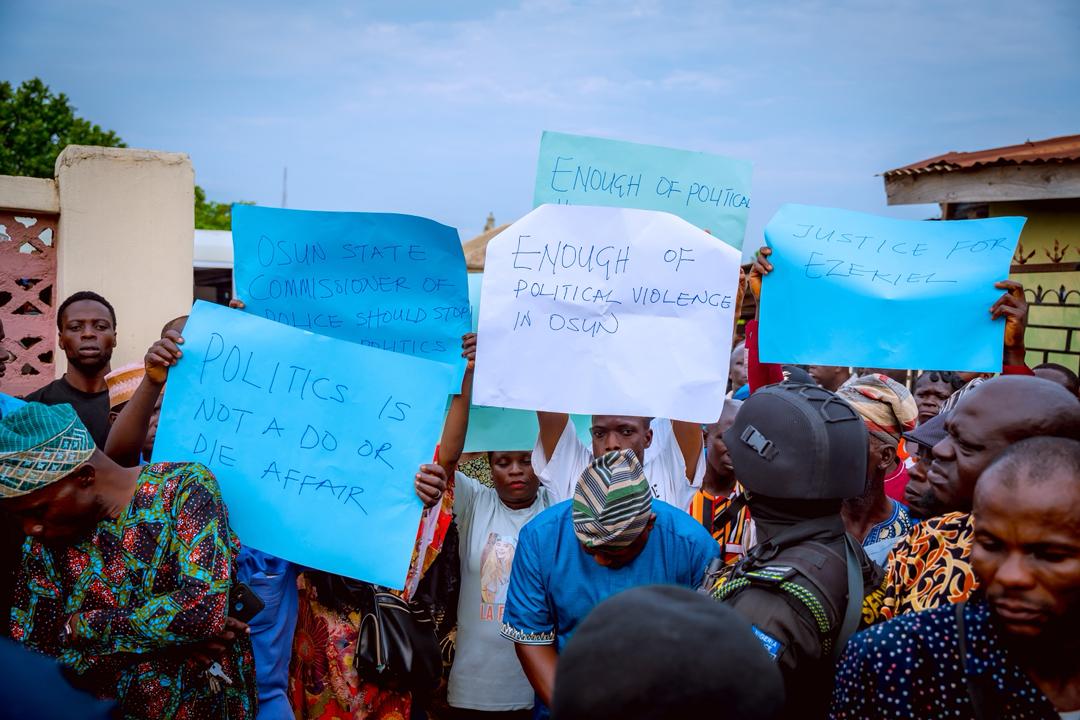
Rather than functioning as a constructive watchdog, the party has frequently appeared consumed by a singular objective: reversing through political maneuvering what it could not secure through the ballot box. This has manifested in repeated attempts to generate political tension, manufacture governance crises, and project instability where none exists.
A healthy opposition critiques government policies. It questions budgetary decisions. It offers alternative solutions. It identifies weaknesses and proposes improvements. Such engagement strengthens democracy because it encourages accountability.
An unhealthy opposition, however, seeks to frustrate governance itself. It celebrates institutional conflict. It thrives on uncertainty. It measures success not by the quality of its ideas but by the extent of disruption it can create.
The difference between both approaches is the difference between democratic participation and political sabotage.
What many Osun citizens increasingly observe today is an opposition that appears more invested in reclaiming power than in serving the people. Every government initiative becomes a target of hostility. Every developmental milestone is greeted with skepticism. Every policy success is either ignored or deliberately downplayed.
Even more concerning is the tendency to weaponize misinformation and exaggeration in pursuit of political advantage. Facts are often subordinated to narratives. Reality is sacrificed for propaganda. Public discourse becomes polluted by sensational claims designed not to inform citizens but to inflame passions.
This represents a dangerous departure from the democratic culture that Osun deserves.
The irony, of course, is that the APC itself benefited for years from the maturity of the PDP opposition. Had the PDP adopted today’s politics of desperation during APC rule, Osun might have descended into perpetual instability. Yet the PDP chose a different path. It chose democratic engagement over democratic disruption.
That decision preserved institutional stability and ultimately strengthened the state’s democratic culture.
Today, the APC faces a simple choice. It can continue down the path of obstruction, confrontation, and desperation, or it can embrace the responsibilities that accompany opposition politics in a democratic society and reposition itself as a credible alternative.
At present, the Adeleke administration continues to be judged by its performance. Roads either exist or they do not. Schools are either improved or they are not. Healthcare facilities are either functioning or they are not. Workers are either paid or they are not. Citizens can assess these realities directly without relying on political spin.
That is ultimately why governance remains the strongest response to opposition desperation.
As the state moves closer to another electoral cycle, voters will once again compare records, conduct, and character. They will remember the rudderless years of APC governance. They will remember the patience and discipline exhibited by the PDP while in opposition. They will also remember the conduct of today’s APC opposition and decide which political tradition better serves the interests of Osun State.
Democracy thrives when governments govern and oppositions oppose responsibly. During twelve challenging years, the PDP demonstrated that opposition is not synonymous with sabotage. It showed that one can disagree without destabilizing, criticize without obstructing, and seek power without making the state ungovernable.
The APC now stands before the same democratic test that once confronted the PDP. Whether it chooses the path of constructive engagement or continued desperation will ultimately determine not only its political future but also how history remembers its conduct in this chapter of Osun’s democratic journey.
So far, unfortunately, the signs have not been encouraging.
- Arákùnrin James Bamgbose is a Village Boy writing from Igbajo, Boluwaduro Local Government Area of Osun State.