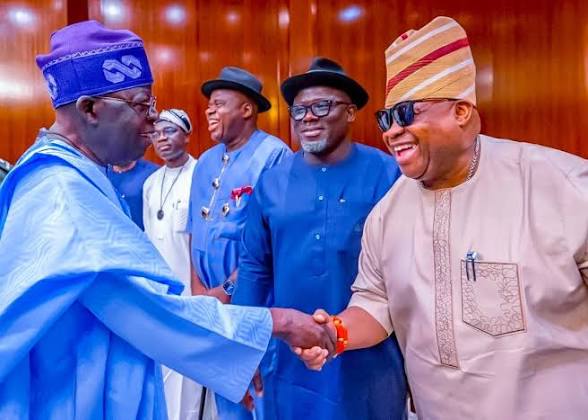
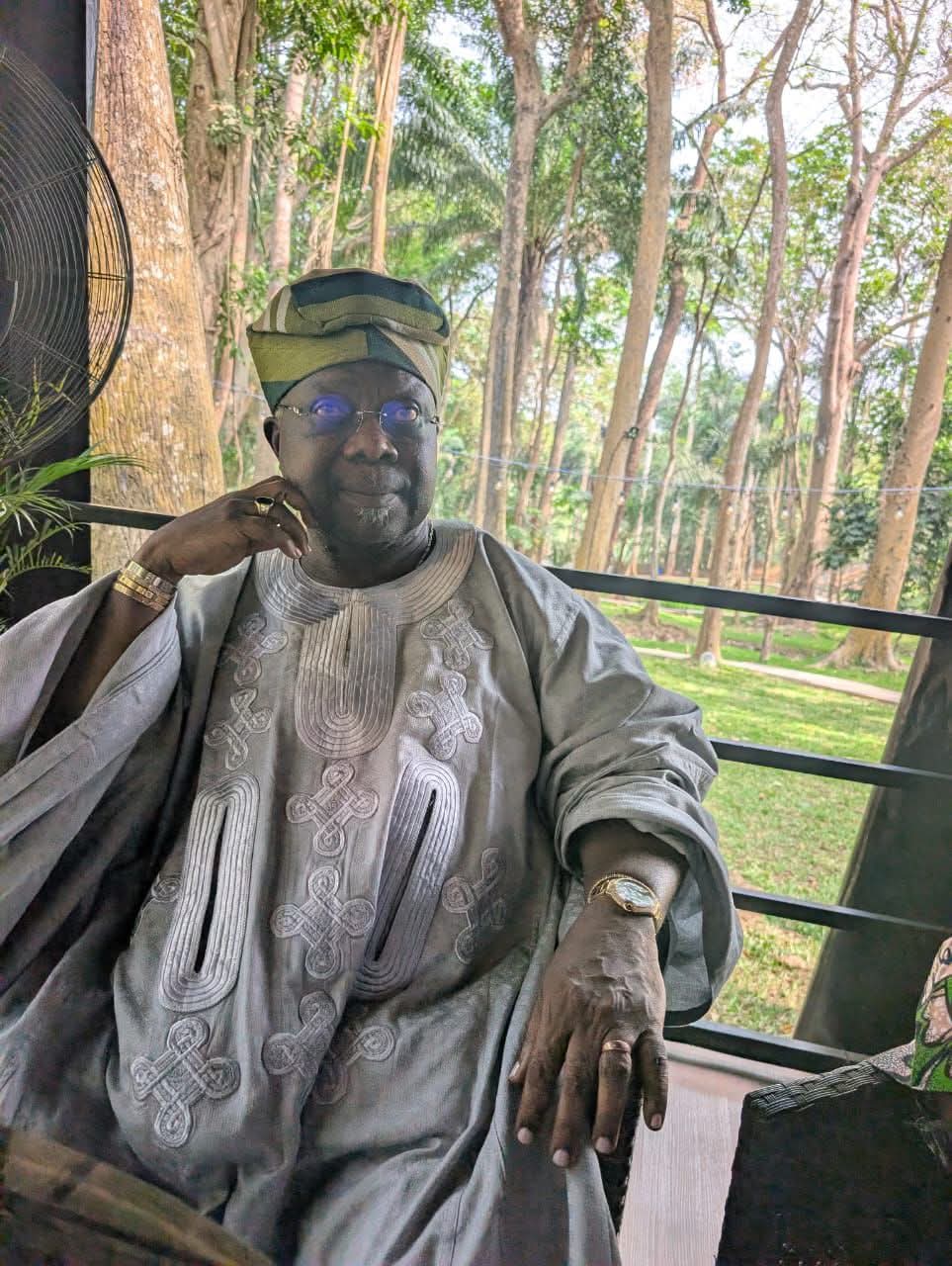
Arobafin, lọba npa meaning it is the one who shows insolence to the king that invites destruction upon himself. In Yoruba cosmology, respect is not a performance. It is a moral code woven into identity, upbringing, and leadership. Royal institutions are not mere ceremonial relics, they are living embodiments of history, honour, and communal dignity. So when an individual, in a very public setting, carelessly attempted to stretch out his hand first to greet a revered royal father during the visit of Her Excellency, Senator Oluremi Tinubu to Ile Ife, it was not just a social misstep. It was a cultural statement with a display of moral deficiency and not a flattering one.
What made the moment heavier was what followed shortly after. The same individual who extended a casual handshake toward a custodian of Yoruba heritage was later seen kneeling respectfully to greet his political leader’s wife at the same event. Culture teaches hierarchy, yes but not selective humility. Respect that bends only where power sits is not respect, it is calculation. And when such contrasting gestures happen within minutes of each other, in the same gathering, the message becomes difficult to ignore. It raises questions not just about manners but about mindset and the intention.
One must even wonder about the motive of whoever released the video clip to the public. Was it mischief? Political sabotage? Or simply the inevitability of truth surfacing in the digital age? Whatever the reason, the footage exposed a pattern that we can say has following this individual before. Recall that he was once seen seated while addressing another royal father, another moment where protocol bowed to personal comfort. Each incident on its own may invite excuses. Together, they begin to form a portrait.
To be clear, no one can conclusively declare that this man is arrogant or incapable of showing respect. But leadership is not judged only by words. It is revealed in instinctive conduct. The way a person greets those who symbolize tradition versus those who represent political advantage tells its own story. In Yoruba land, how you bend your knees often shows how you bend your loyalty.
This is why the adjective once used by Senator Iyiola Omisore “lackey” to this individual is finding renewed relevance in public discourse. A lackey is not merely a follower. He is one whose allegiance flows upward in search of favour, not outward in service of people or heritage. When reverence is reserved for those who can dispense appointments while cultural guardians receive casual courtesy, the label begins to explain itself.
Osun’s political future cannot afford leaders whose respect rises and falls with proximity to power. The state stands on the shoulders of institutions older than any political party, deeper than any campaign structure, and more enduring than any temporary office. Those who seek to lead must understand that royalty is not an obstacle to navigate, but a heritage to honour.
As we approach another election season, I will also be running a detailed sectorial account of the achievements of Governor Ademola Adeleke, so the public can clearly see the difference between leadership rooted in service and followership driven by personal survival.
Because in the end, the proverb still speaks, it is not noise or opposition that undoes a person. It is character. And when conduct consistently bows to influence instead of values, the throne of public trust becomes very difficult to approach.
I’m an official aides to Gov Adeleke, and I am joining my voice with that of the unofficial aides in the movement of keeping Osun in Accord for GOOD GOVERNANCE.
- James Bamgbose writes from Igbajo, Boluwaduro Local Government, Osun State, Nigeria.