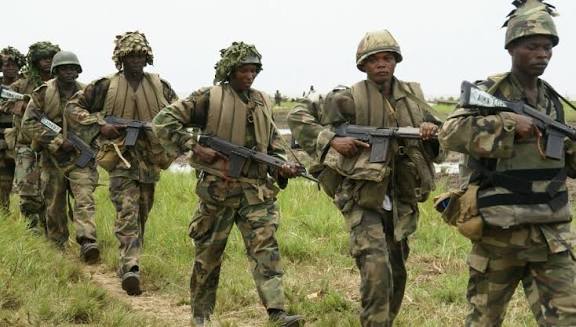
A major fallout of the recent Nigerian intervention in the failed coup plot in the Republic of Benin is the detention of Nigerian military aircraft, along with some soldiers, in Burkina Faso. The aircraft, according to the Nigerian authorities, was on its way to Portugal for routine maintenance when it flew over Burkina Faso airspace and made the consequent landing in the country. Given that Nigeria and Burkina Faso are at variance with the coup in Benin, with the former opposed to it while the latter supports it, the Burkinabe government obviously did not believe the Nigerian story, arguing that the Nigerian aircraft was in its airspace without any authorization.
This event is against the background of the frosty relationship between the two countries in recent years. The Burkina Faso government, an outcome of a coup. Burkina Faso, along with Mali and Niger, which make up AES and are all led by military regimes, favors military takeover across Africa as an integral part of the decolonization of the continent. Nigeria, however, opposes this and sees the trend as a threat to its fragile democracy. The situation is further strained by Burkina Faso’s hostility towards its former colonial master, France, a European country with which the Nigerian government is friendly. Burkina Faso thus suspiciously views Nigeria’s friendship with France as a relationship forged by an agenda to return the AES countries to the captivity of France, which had for decades relied on the exploitation of its former colonies for its survival.
As the detention of the Nigerian military personnel is turning from days into weeks, some commentators, including Senator Ayo Arise from Ekiti State, are justifiably becoming agitated and are suggesting military action to resolve the conflict. They are understandably angry at how giant Nigeria is being humiliated by a smallish Burkina Faso. I, however, beg to differ. I believe that a diplomatic solution rather than a military action is the way to go. I don’t think that the Nigerian government has exhausted all diplomatic solutions to the crisis. The last thing Nigeria needs at this point, when it is beginning to recover from its lingering socio-economic crisis, is a long-drawn war with not just Burkina Faso but also Mali and Niger away from home, while there are also international actors lurking in the shadows to profit from bloodletting among African brothers. It’s also important to remember that an internal asymmetric war against bandits and terrorists is still ongoing.
Most African countries, unfortunately, are mere pawns in the hands of the big international actors. The AES countries today are under the orbit of Russian influence. And for me, that is where the solution may lie. Nigeria can leverage its strong relationship with Russia, including seeking the involvement of China, which is currently a close ally of Russia, to defuse tensions. Such third-party mediation can also include neutral African actors such as Algeria and Chad, who retain credibility with Burkina Faso’s leadership and could help facilitate dialogue behind the scenes, offering a face-saving diplomatic exit for all involved. A carefully calibrated approach, rooted in discretion and shared security interests, offers the most viable path toward securing the personnel’s release while preserving long-term relations in the Sahel.
At the heart of this strategy is a quiet bilateral engagement. Nigerian officials should prioritize back-channel diplomacy through the friends of Burkina Faso, mindful that Burkina Faso’s military-led government is particularly worried about French influence and is wary of the closeness between Nigeria and France. Discreet discussions aimed at clarifying the mission of the detained personnel—whether related to transit, intelligence, or security cooperation—could allow both sides to step back from escalation without loss of face.
Framing the incident as a regional security misunderstanding rather than a violation of sovereignty may help de-escalate the situation. Nigeria and the Sahel countries need each other in confronting threats from jihadist groups operating across porous borders. Nigeria can recast the incident as a lapse in coordination rather than an act of espionage, providing Burkina Faso with a justification to release the detainees without appearing weak.
Most importantly, everything must be done to avoid public escalation of the conflict. Open accusations or threats would likely entrench positions and complicate negotiations. A measured public tone allows diplomatic channels to function without the pressure of domestic or regional politics. Ultimately, Nigeria’s strongest leverage lies not in coercive tactics but in its regional legitimacy, diplomatic capital, and shared security interests with its neighbors. By prioritizing cooperation and working through both bilateral and multilateral channels, Abuja stands the best chance of resolving the dispute and maintaining strategic stability in the Sahel.
Professor Raufu, former Editor of Nigerian Tribune and ex-Managing Director and Editor-in-Chief of National Mirror Newspapers, is an Associate Professor of Criminal Justice at Southern University and A&M College, Baton Rouge, Louisiana in the United States of America.