The Guild of Online Media Editors and Publishers (GOMEP) Nigeria has released its much anticipated 2025 Governance Accountability and Transparency Index (GATI) Report, with Abia, Borno, Ekiti, Anambra, Kaduna, Osun, Delta, Kano, Enugu and Kogi States emerging Top 10 performing states in the country.
The Report unveiled at a press conference in Abuja, the Nigeria capital territory, on Friday, March 13, 2026, marks the second edition of the annual Governance Accountability and Transparency Index (GATI) Report developed by the GOMEP Nigeria, an umbrella body of more than 75 online media editors and publishers across Nigeria.
The annual report seeks to strengthen democratic governance by assessing how transparently and responsibly Nigeria’s 36 state governments conduct public affairs, while also reinforcing the media’s role as an impartial watchdog on governance, social justice and public interest.
Purpose of the Index
According to GOMEP Nigeria, the Governance Accountability and Transparency Index (GATI) was conceived to deepen good governance by placing greater scrutiny on the activities of state governments through measurable indicators that reflect transparency, accountability and responsiveness to citizens.
The 2025 index assessed all the 36 states using seven key measurable indices, namely:
- Public Access to Information and Open Data Initiatives:
– Implementation of Freedom of Information (FOI) laws
– Government websites and online portals
-Government data portals
– Data formats and accessibility - Budget Transparency and Participatory Budgeting:
– Access to budget documents
– Clarity and accessibility of budget documents
– Details of budget expenditures
– Citizen engagement in budgeting processes
– Public hearings and consultations - Audit and Oversight:
– Independence of audit institutions
– Effectiveness of parliamentary oversight - Anti-Corruption Efforts:
– Effectiveness of Whistleblower protection laws - Government Responsiveness:
– Timeliness of government responses to citizen inquiries
– Citizen satisfaction surveys - Procurement Transparency:
– Publicly available procurement information
– Tender processes and contract awards. - Media Freedom:
– Press freedom
– Journalists’ safety and protection
Methodology Used
Presenting the report, the National President of the GOMEP Nigeria, Dr. Dozie Nwankodu, who is also the Publisher of GlobalReporters.Ng stated that the group adopted five internationally recognised methodologies in evaluating the states.
These include:
Surveys conducted among citizens, businesses and government officials;
Document Reviews of publicly available government policies, laws and records;
Expert Assessments involving academics and civil society organisations;
Data Analyses using statistical models from multiple sources; and
Index Aggregation using weighted averages to determine final scores.
Dr. Nwankodu explained that each of the seven indices was scored independently before the Average Index Point for each state was determined.
“Points were awarded to states based on merit across the seven indices. The final index mark for each state was obtained by adding the scores across the indices and dividing by seven,” he said.
He further explained the grading system:
85% – 100%: Category A – Exceptional Performance
65% – 84%: Category B – Strong Performance
45% – 64%: Category C – Average Performance
25% – 44%: Category D – Poor Performance
0% – 24%: Category E – None Performance.
Rigorous Data Collection Process
Speaking on the credibility of the report, the Chairman of the Appraisal Committee and Publisher of Naija NewsHouse, Comrade Dominic Edem, said the evaluation process was rigorous and adhered to global best practices. He disclosed that the committee consisted of 36 professionals drawn from the media, academia and civil society, painstakingly analysed data gathered from across the country.
“Our approach combined both quantitative and qualitative methods, including surveys, interviews and analyses of publicly available information across the states,” Edem said.
According to him, primary data were collated by field agents across the 36 states within a 90-day period, generating 350 data points per state, amounting to 12,600 data entries nationwide.
He added that the data were compiled by the Information and Data Desk of GOMEP before being reviewed by the Appraisal Committee, which carefully analysed them before submitting the final report to the general house – membership of the GOMEP Nigeria for adoption.
Comparative Performance of Category A States (Exceptional Performance) in the 2025 GATI Report To The Previous Year, 2024 Report.
From the Report obtained by newsmen, during the unveiling of the GATI 2025 Report, a comparative analyses of the 2024 First Edition, and the 2025 Edition revealed notable improvements in governance performance across several Nigerian states, with four states (Abia, Kaduna, Kano and Kogi), which hitherto were not in (Category A – Exceptional Performance) bracket, advancing into the position, while six others consolidated their positions.
Abia State recorded a significant progression between the two editions. In the 2024 report, the state ranked under Category B (Strong Performance) with an Average Index Point of 82.2. But in the 2025 edition, Abia advanced to Category A (Exceptional Performance) with 90.0 points, representing an increase of 7.8 points, or a 9.49% improvement in its governance performance score.
Borno State, which already occupied the Exceptional Performance category in 2024 with an Average Index Point of 86.3, further strengthened its standing in 2025. The state achieved 89.7 points, reflecting a 3.4-point increase and a 3.94% improvement, thereby consolidating its position among the leading performers.
Ekiti State demonstrated steady advancement, improving from 86.3 points in 2024 to 89.6 points in 2025. This 3.3-point increase represents a 3.82% growth in its governance performance index.
Anambra State also recorded measurable progress, rising from 86.3 points in 2024 to 89.3 points in 2025, representing a 3.0-point increase and a 3.47% improvement.
Kaduna State recorded one of the most notable upward movements among the states that previously fell below Category A. In 2024, Kaduna ranked in Category B (Strong Performance) with an Average Index Point of 81.7. By 2025, it had risen to Category A (Exceptional Performance) with 89.3 points, reflecting a 7.6-point increase, equivalent to a 9.30% improvement.
Osun State posted notable gains as well, increasing from 86.3 points in 2024 to 89.3 points in 2025, a 3.0-point rise representing a 3.47% improvement.
Similarly, Delta State improved from 86.3 points in 2024 to 89.3 points in 2025, marking a 3.0-point increase and a 3.47% growth in its index score.
Kano State recorded one of the most remarkable improvements in the index. In the 2024 Report, the state was placed in Category C (Average Performance) with an Average Index Point of 58.6. In the 2025 Edition, however, Kano surged to Category A (Exceptional Performance) with an Average Index Point of 89.1. This represents an impressive 30.5-point increase, translating to a 52.05% improvement in governance performance.
Enugu State maintained its position within the high-performing tier, moving modestly from 86.3 points in 2024 to 86.4 points in 2025. This reflects a 0.1-point increase, equivalent to a 0.12% improvement, indicating stability in governance performance.
Perhaps the most dramatic improvement was recorded by Kogi State. In the 2024 report, the state ranked in Category D (Poor Performance) with an Average Index Point of 33.9. In the 2025 edition, however, Kogi surged to Category A (Exceptional Performance) with 85.5 points. This represents an extraordinary 51.6-point increase, translating to a 152.21% improvement—one of the most significant governance performance turnarounds captured in the index.
Focus On Governance Transparency
Also speaking at the event, the Deputy National President of GOMEP and Publisher of Satcomm Online, Luqman Oluwatoyin Bolakale, noted that the index specifically examined governance models adopted by state governments and how transparency and accountability were embedded in their programmes.
“For there to be meaningful development, transparency and accountability must remain the cornerstone of governance. All we did was examine how state governments performed within those parameters, knowing that good governance reflects clearly when those two indicators are present in public institutions,” Bolakale stated.
Overcoming Field Challenges
The Secretary of the Appraisal Committee and Publisher of Marshal Newslink, Comrade Ndiana Okon acknowledged that security challenges in some parts of the country posed difficulties during the data gathering process, causing the delay in the release of the 2025 Index Report. However, he commended the dedication of GOMEP’s field agents who were able to obtain credible data from all the states, ensuring the reliability of the final report.
He also disclosed that the top 10 state governors recognised in the 2025 Index Report would receive Certificates of Merit from GOMEP in recognition of their commitment to governance transparency and accountability.
Okon further noted that the index will remain an annual exercise designed to encourage healthy competition among states and promote better governance across Nigeria.
Call For Greater Transparency
In his closing remarks, the National President of the GOMEP, Dr. Dozie Nwankodu, called on government institutions at all levels to embrace transparency and accountability as the foundation of democratic governance.
He also revealed that the organisation plans to extend the assessment framework to Federal Ministries and the National Assembly in future editions.
Overall, GOMEP’s 2025 GATI Report highlighted a broad upward trajectory in governance standards, with several states not only improving their index scores, but also transitioning into higher performance categories.
These gains, according to the GOMEP, signal strengthening commitments to accountability, transparency, and institutional performance, key pillars for sustainable governance and public sector credibility.
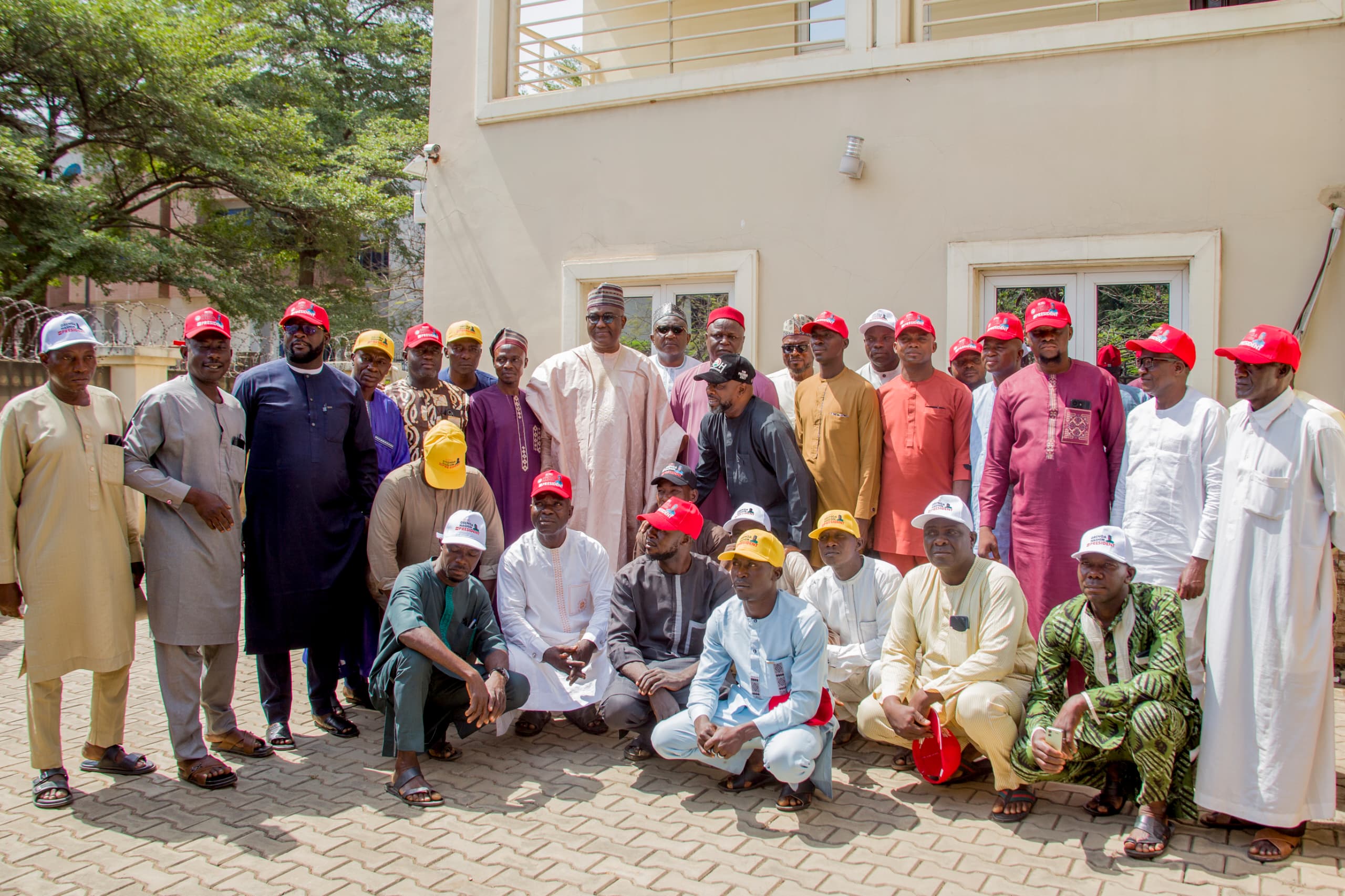
The press briefing was attended by members of GOMEP, media practitioners, members of the academia, and representatives of civil society organisations.