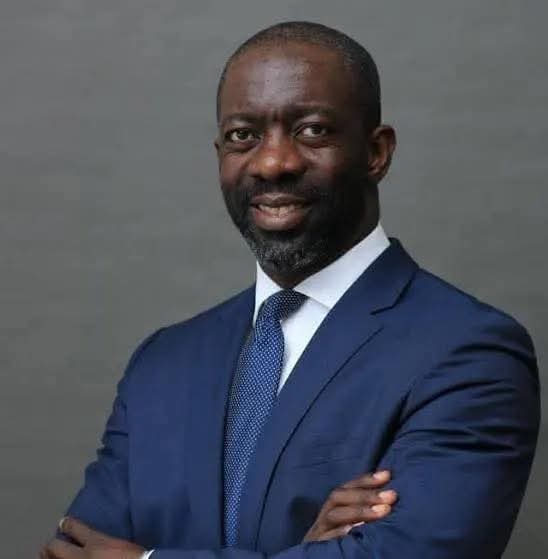
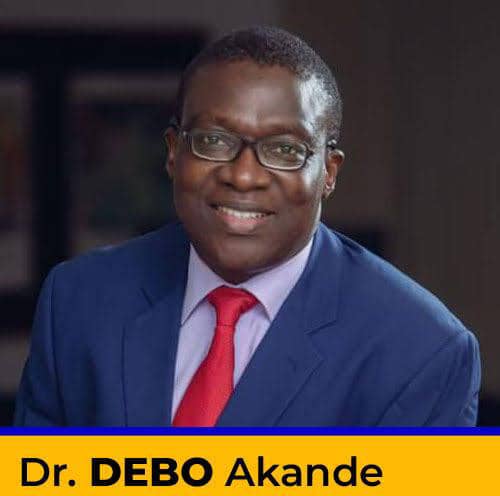
In a political environment where visibility is often mistaken for value, silence can be a dangerous currency. Across Oyo State’s political landscape, a curious narrative has taken shape around Debo Akande, not because of what he has done, but because of what he has chosen not to say.
Since 2019, Akande’s deliberate distance from media amplification, particularly regarding his philanthropic efforts and empowerment initiatives, has created a vacuum.
In that space, speculation has thrived. Among some political actors, his low-profile approach has been interpreted less as restraint and more as detachment, even aloofness.
Yet, within policy and development circles, a markedly different assessment persists. What appears to be absence in the public arena is, in reality, a different philosophy of engagement, one that privileges outcomes over optics.
Akande’s trajectory within the administration of Governor Seyi Makinde has been defined by responsibility rather than rhetoric. Serving as Executive Adviser on International Cooperation and Development, he operates in a domain where results are measured not in headlines but in negotiated partnerships, structured programmes, and sustained economic value.
It is a role that rarely lends itself to spectacle. Instead, it demands technical precision, institutional coordination, and the patience to build credibility with international partners and investors, a process that unfolds quantitatively from the immediacy of political applause.
Yet, beyond government, there have been consistent, if understated, accounts of interventions tied to empowerment, youth engagement, and community support. These efforts, largely undocumented in the media, have contributed to a perception gap.
In a political culture where philanthropy is often broadcast as proof of compassion or influence, Akande’s refusal to publicise such activities has led some to question whether they exist at all.
That misgiving, however, says as much about the expectations of the political class as it does about the man himself.
For Akande, the logic appears different. His approach aligns more closely with a technocratic ethos, one that views development as a system to be built, not a performance to be staged. Within this framework, the real work lies in designing structures that outlast individual recognition.
This philosophy is perhaps most visible in the investment architecture he has helped shape for Oyo State. Over the past several years, the state’s engagement with international development institutions, foreign partners, and private investors has become more coordinated and increasingly credible.
Programmes in agriculture, agribusiness, and enterprise development have not only attracted interest but have also begun to redefine how the state is perceived economically.
These shifts are rarely sudden or dramatic. They are the product of sustained negotiation, policy alignment, and the creation of bankable frameworks, processes that seldom make compelling headlines but carry long-term significance.
Agriculture, in particular, illustrates this quiet transformation. Through structured interventions and partnerships, the sector is gradually transitioning from subsistence to enterprise.
Farmers are being integrated into value chains, young people are finding entry points into agribusiness, and rural economies are becoming more connected to broader commercial systems.
These are not the kinds of achievements that lend themselves easily to political branding. They are incremental, systemic, and often invisible until their cumulative impact becomes undeniable.
It is within this context that the perception gap surrounding Akande becomes more instructive than problematic. For some politicians, visibility remains the primary metric of relevance.
For technocrats, however, influence is often exercised from public scrutiny, embedded within policies, institutions, and long-term frameworks.
The tension between these two approaches is not unique to Oyo State. It reflects a broader question about leadership in contemporary governance: should effectiveness be judged by presence in the media, or by the durability of outcomes?
Akande’s career offers a subtle but compelling response. His influence has not been built through campaign-style visibility or carefully curated public narratives. Instead, it has emerged through his role in shaping the economic logic underpinning several of the state’s development initiatives.
Those familiar with the inner workings of government frequently describe him as part of the technocratic core responsible for translating political vision into executable, investment-ready programmes. It is the kind of work that bridges ambition with feasibility, ensuring that policy ideas can attract real financing and deliver measurable impact.
Such contributions rarely generate immediate political capital. They do, however, create the conditions for sustainable growth. This raises an inevitable consideration. In a state seeking to position itself as a credible investment destination, the qualities required of leadership may be evolving.
Economic literacy, institutional understanding, and the ability to navigate global partnerships are becoming increasingly central to governance.
In that regard, Akande represents a model that contrasts sharply with traditional political archetypes. His restraint in self-promotion, while open to misinterpretation, also underscores a disciplined focus on substance over spectacle.
Whether this approach will continue to be misunderstood within political circles remains uncertain. What is clear, however, is that the outcomes associated with his work are gradually becoming more visible, even if the architect remains largely in the background.
And perhaps that is the paradox at the heart of his public image: a figure whose silence has invited doubt, yet whose work continues to speak, steadily, structurally, and with consequences that may ultimately outlast the noise of politics.
CC: CC: GOALPOACHERNEWS