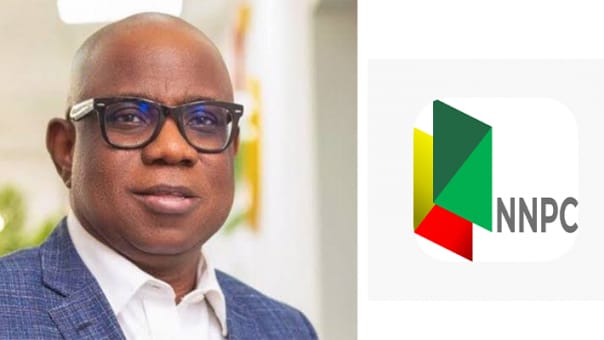
Eight months after assuming office as Group Chief Executive Officer of NNPC Limited, Bayo Ojulari is gradually being defined not by dramatic policy shifts, but by something far more consequential in Nigeria’s oil and gas sector: institutional stability that sustains value. In an industry long accustomed to disruption with every leadership change, Ojulari’s tenure has so far been marked by continuity, consolidation and a measured deepening of diversification.
When Ojulari took over in April 2025, NNPC Ltd was not a distressed enterprise. The company had just recorded the strongest financial performance in its history, posting a Profit After Tax of N5.4 trillion for the 2024 financial year. That milestone capped a five-year turnaround from losses in 2018 and 2019 to sustained profitability from 2020. Expectations, therefore, centred on stewardship rather than rescue.
Industry watchers note that Ojulari’s early decisions reflect a clear understanding of this context. Instead of dismantling existing frameworks, he has focused on stabilising operations, protecting gains already made and strengthening diversification efforts aimed at making profitability repeatable rather than episodic.
Central to this approach is the recognition that crude oil exports alone can no longer anchor NNPC’s future. While oil remains critical, Ojulari has leaned into a broader energy and infrastructure portfolio, with gas development, downstream efficiency, transparency and regional energy partnerships gaining prominence.
Although the 2024 profit preceded his appointment, Ojulari has consistently described profitability as a platform, not a peak. This philosophy has been reflected in sustained revenue performance into 2025. Monthly financial disclosures have continued with renewed consistency, reinforcing transparency and accountability. In May 2025, NNPC reported revenues of about N6 trillion, while remittances to the federation between January and April exceeded N5.5 trillion.
Gas infrastructure has emerged as a key pillar of diversification. Under Ojulari’s watch, the Ajaokuta–Kaduna–Kano (AKK) Gas Pipeline achieved a major milestone with the successful River Niger crossing, moving the project closer to completion. Alongside the Obiafu–Obrikom–Oben pipeline, the AKK project underpins Nigeria’s strategy to expand domestic gas utilisation and unlock more stable revenue streams.
Ojulari has also elevated NNPC’s regional energy diplomacy. Projects such as the Nigeria–Morocco Gas Pipeline, inherited from earlier administrations, have retained momentum under his leadership, positioning NNPC as a continental energy enabler with long-term commercial and geopolitical value.
Meanwhile, core oil operations have been stabilised through near-total availability of major crude pipelines and improved security frameworks, leading to higher production levels and reduced losses. Downstream operations have also adopted a more pragmatic, commercially driven outlook, with openness to partnerships and alternative models.
Ultimately, Ojulari’s first eight months have been defined by restraint and consolidation. By building on what works rather than chasing disruption, he has kept NNPC Ltd firmly on a growth path, with diversification serving as both risk management and a foundation for long-term.