

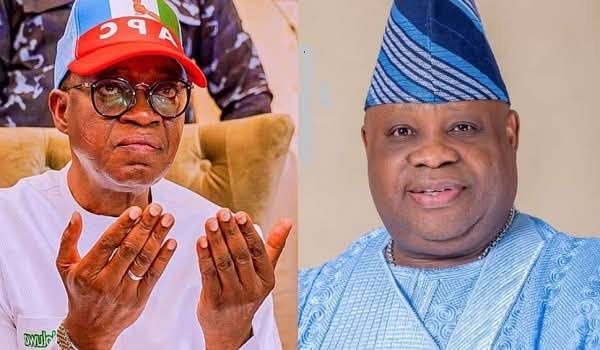
In politics, memory matters and that’s often why it’s the first thing people try to rewrite. As the quiet build-up to the 2026 Osun governorship election begins, there’s a noticeable effort to dress up the past in borrowed garments of progress. But governance isn’t measured by how well history is retold; it is measured by how people actually lived. And the people of Osun have not forgotten.
There’s a certain danger in selective storytelling, the kind that edits out hardship and amplifies half-truths. It banks on time dulling reality, on citizens forgetting what they once endured. But Osun is not suffering from amnesia. The memories are still fresh, the experiences still real, and they continue to shape how people see both the past and the present.
Before any honest conversation about 2026 can begin, there must be a moment of reflection. Not the polished version offered by political actors seeking a comeback, but the lived reality of Osun people (workers, pensioners, traders, students) whose daily lives were shaped by government decisions.
There was indeed an Osun before Governor Ademola Adeleke brought real transformation to it. And it is disheartening that those who governed the state for over a decade now struggle to point convincingly to their own record as a reason to be trusted again. Instead of accountability, what we often see is indifference mixed with desperation. This is why, at this point in our democratic journey, it is important to resist revisionism and confront the past with clarity. Only then can we properly understand the present and make informed choices about the future.
Before 27 Nov, 2022, Osun State was a total shadow of its full potential, weighed down by difficult choices. Despite its rich culture and energetic population, many of its people lived through policies that did not translate into real progress. The humongous debt profile cast a long shadow over everyday life. Civil servants faced irregular payments, and the normalization of half salaries went beyond numbers, it became a human survival struggle. Pensioners, after years of service, were left in uncertainty, their retirement stripped of the dignity it deserved. For many households, survival was no longer guaranteed; it became something to fight for daily.
That strain didn’t stay confined, it spread across the economy. Markets slowed, small businesses struggled, and families had less to spend. What should have been a thriving subnational economy gradually weakened. More troubling was how this hardship began to feel normal. Governance seemed less about solving problems and more about shifting blame. Even when opportunities arose to ease the burden, responses were often evasive rather than decisive.
Infrastructure told a similar story. Projects were abandoned, and development appeared uneven. In many rural communities, roads that should have connected farmers to markets remained in poor condition. Access to healthcare, education, and economic opportunities were often determined not by distance, but by whether the roads leading there were usable at all.
The health sector reflected these gaps even more sharply. Primary healthcare centres which is meant to be the first point of care, were left in poor condition, many lacking basic equipment and functionality despite claims to have spent the 20 million dollars health grants. For residents, especially in rural areas, getting medical care became both a financial and physical challenge. It widened inequality in a way that made quality healthcare feel like a privilege rather than a right.
Education, one of Osun’s proudest strengths, also felt the strain. Policy inconsistencies and infrastructural challenges created uncertainty for students, teachers, and parents. Instead of stability, there was shame. The state position in National exams became a thing of shame and great concern.
Beyond all these sectors, however, was something deeper, a growing loss of trust. Governance felt in distance. Engagement reduced. Decisions seemed removed from the realities on the ground. Over time, many people didn’t just feel underserved; they felt ignored and neglected. And that erosion of trust became one of the defining marks of that 12 years era.
By the time the 2022 election finally approached, the mood had shifted. What had once been quiet endurance turned into a collective demand for change. People were tired of illogical explanations, they wanted results. It was in that moment that Governor Ademola Adeleke’s profile resonated more strongly. His emergence was not by chance; it reflected both his track record and the public’s desire for a different direction. For the people, he represented a break from a system that had lost its human touch.
As conversations about 2026 begin to take shape, it is important to anchor them in history. The past is not just something to reference, it is something to learn from. It explains why decisions were made and shapes expectations for what should come next.
- Arákùnrin James Bamgbose is a media aide to Governor Ademola Adeleke. He writes from Igbajo, Boluwaduro Local Government and can be reached via bamgbosejames9@gmail.com