

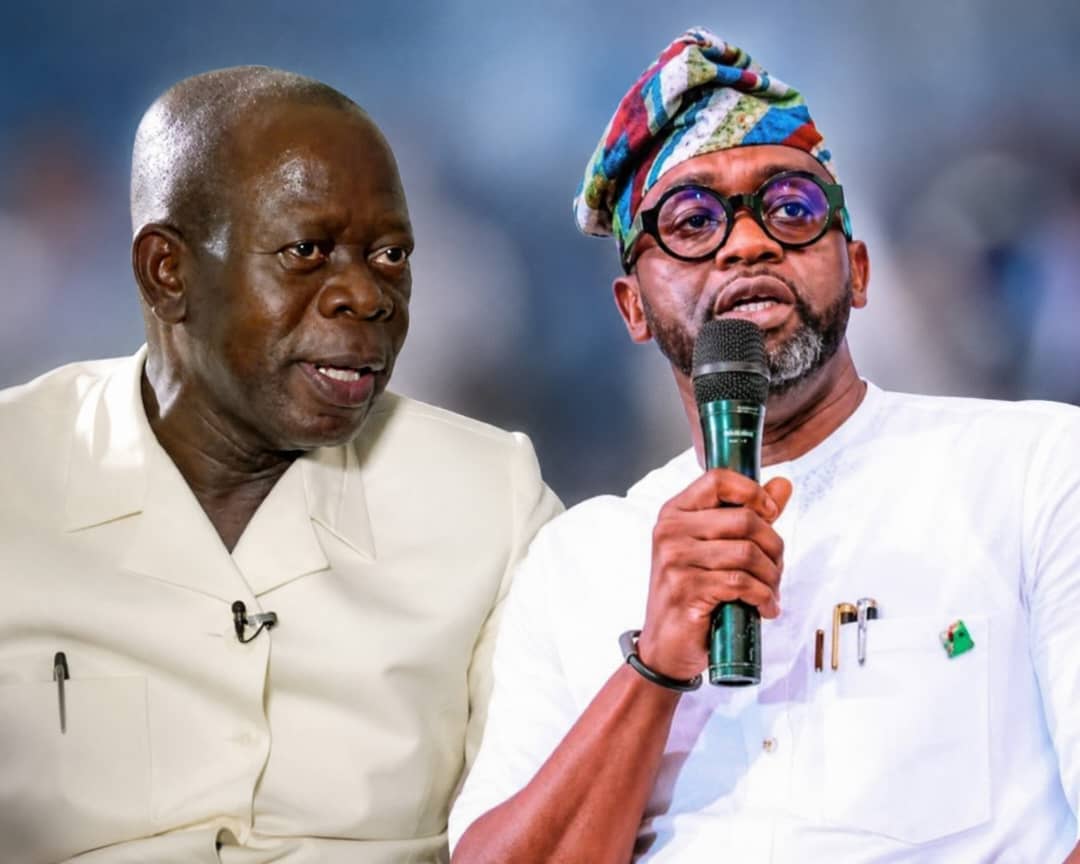
Senator Adams Oshiomhole is one of Nigeria’s most recognizable political figures. As a former labour leader, governor, national party chairman and now senator, his words carry enormous weight. That is why his recent assertion that the Nigerian National Petroleum Company Limited, NNPCL, is “filled with rogues” deserves serious scrutiny.
No institution should be immune from public scrutiny. Where there is evidence of corruption, abuse of office or misconduct, those responsible must be identified, investigated and punished.
Accountability is essential to good governance.
However, there is a fundamental difference between demanding accountability and condemning an entire institution with one sweeping statement.
NNPCL is not a handful of executives. It is a national institution employing thousands of Nigerians, engineers, geologists, accountants, economists, lawyers, technicians, project managers and other professionals, who work daily to sustain the country’s most strategic industry. To describe the organisation as being “filled with rogues” is to cast a shadow over every one of these hardworking Nigerians, regardless of their individual records or integrity.
Such rhetoric may generate headlines, but it comes at a significant cost.
First, it undermines investor confidence.
Nigeria is competing aggressively for investment in the global energy market. International investors, lenders and strategic partners closely monitor public statements made by senior political leaders. When a prominent senator publicly portrays Nigeria’s flagship energy company as an organisation populated by criminals, it sends a damaging signal to potential investors.
Investors do not hear nuance. They hear risk.
At a time when President Bola Tinubu’s administration is working tirelessly to attract billions of dollars in investment into Nigeria’s energy sector, such statements are deeply counterproductive. Over the past two years, the Federal Government has committed enormous resources, diplomatic capital, time and energy to rebuilding confidence in Nigeria’s oil and gas industry.
Senior government officials have travelled across the world engaging investors, development finance institutions, energy companies and strategic partners. Regulatory reforms have been introduced. Investment roadshows have been organised. Bilateral engagements have been pursued. The goal has been clear, to convince the world that Nigeria is open for business and remains one of the most attractive energy destinations on the African continent.
These efforts are not theoretical. They are real, deliberate and ongoing.
As someone who has personally participated in efforts to build international partnerships for both the organisation and Nigeria’s energy sector, I understand the painstaking work involved in restoring investor confidence. Relationships are built over months and years. Confidence is earned through consistency, professionalism and credibility.
Just two weeks ago, I was part of a team that engaged senior officials of the United States Government on strengthening energy cooperation with Nigeria. Those discussions focused on expanding collaboration, encouraging investment, supporting energy security and creating new opportunities within Nigeria’s oil and gas sector.
The message from our American counterparts was encouraging. There was a clear willingness to deepen cooperation, explore new partnerships and support investment opportunities in Nigeria’s energy industry. There was even a readiness to commit resources toward initiatives that would strengthen collaboration and unlock opportunities in the sector. Such engagements represent the type of strategic international cooperation that can unlock billions of dollars in investment, create jobs and strengthen Nigeria’s economy.
It therefore becomes troubling when a senior Nigerian leader publicly characterises the country’s flagship energy company as being “filled with rogues.” Statements like these undermine the very work that government officials, diplomats, regulators and industry stakeholders are undertaking to attract investment and strengthen international confidence in Nigeria.
Equally troubling is the promotion of the allegation that NNPCL has N210 trillion in unaccounted funds.
Every allegation deserves investigation. Every public institution must be accountable. However, allegations of such magnitude must also be tested against facts and financial realities.
The N210 trillion figure is mathematically difficult to reconcile with NNPCL’s publicly reported financial records for the period under review.
According to the company’s financial statements, total revenue for the period was approximately N54.5 trillion. It therefore raises legitimate questions as to how an alleged unaccounted amount of N210 trillion, nearly four times the reported revenue, could exist within the same financial framework.
This is not an argument against transparency. It is an argument for accuracy.
When figures that appear inconsistent with financial realities are repeated without proper context or verification, they create damaging narratives that travel far beyond Nigeria’s borders. International investors, financial institutions, credit agencies, development partners and foreign governments rarely follow the intricate details of Nigeria’s domestic political debates. What they often see are sensational headlines suggesting that hundreds of trillions of naira have disappeared from the nation’s most strategic economic institution.
The potential damage to Nigeria’s image is enormous.
Investors may postpone decisions. Strategic partners may reassess risks. Financial institutions may become more cautious. International media organisations may reinforce long-standing negative stereotypes about Nigeria. Years of painstaking efforts to improve the country’s reputation can be undermined by a few careless statements that are not grounded in verifiable facts.
Political theatre may generate applause. It does not generate investment.
Second, it damages Nigeria’s international reputation.
Nigeria already battles negative perceptions abroad. Unfortunately, stories about corruption often travel faster than stories about reform, innovation and progress. When a senior lawmaker publicly characterises one of the country’s most important institutions as being “filled with rogues,” the statement quickly becomes international ammunition for those who already view Nigeria through a lens of dysfunction.
The consequence is reputational damage that affects not only NNPCL but the entire country.
At a time when Nigeria is actively seeking foreign investment, negotiating strategic partnerships and promoting itself as a reliable destination for global capital, national leaders should be conscious of the signals they send to the world. Public statements that unnecessarily undermine confidence in key national institutions can have consequences far beyond domestic politics.
Third, it weakens public institutions.
Strong democracies are built by strengthening institutions, not by indiscriminately destroying public confidence in them. If there are individuals within NNPCL who have violated the law, they should be named, investigated and prosecuted. Accountability should be specific and evidence based.
Painting an entire institution with one broad brush encourages cynicism and erodes public trust in the state’s ability to function effectively. That does not strengthen governance. It weakens it.
Fourth, it demoralises honest workers.
Thousands of Nigerians working within NNPCL have dedicated decades of their lives to building expertise in one of the world’s most complex industries. Many operate under difficult conditions to ensure the country’s energy security and economic stability.
To dismiss the contributions of these professionals through a sweeping label is unfair and deeply demoralising.
Ironically, Senator Oshiomhole himself should appreciate the dangers of broad generalisations.
Throughout his political career, he has faced numerous controversies, petitions, accusations and political battles. Various groups and individuals have at different times called for investigations into his conduct while serving as Governor of Edo State and during other periods of his public life. Political opponents have levelled allegations ranging from abuse of office to financial impropriety and other forms of misconduct.
Whether those allegations were substantiated or not is beside the point.
The principle remains the same. Allegations do not amount to guilt, and no public official should be condemned solely on the basis of accusations or perceptions. If Senator Oshiomhole would rightly reject attempts to define his entire public career by allegations and controversies, then he should extend the same fairness to thousands of employees at NNPCL who have not been accused of any wrongdoing.
The fight against corruption should never become a war against institutions themselves.
Nigeria’s challenge is not a lack of institutions. The challenge is ensuring that those institutions become stronger, more transparent and more accountable. That process requires evidence, investigations and due process, not blanket condemnations that tarnish the reputations of innocent professionals and damage the country’s standing before the world.
Senator Oshiomhole has every right to ask hard questions. He has every right to demand accountability. That is part of his constitutional responsibility as a lawmaker.
What is not helpful is resorting to populist soundbites that may win applause in the moment but inflict long term damage on Nigeria’s economic interests.
Leadership is not about playing to the gallery. Leadership is about understanding the consequences of one’s words and actions.
At a time when the Federal Government is working aggressively to attract investment, deepen international partnerships and reposition Nigeria’s energy sector for growth, leaders must exercise greater restraint and responsibility in public discourse.
Words matter.
When spoken by influential leaders, they matter even more.
If there are rogues within any institution, let them be identified and punished. But let us not undermine investor confidence, weaken national institutions, demoralise honest workers and damage Nigeria’s global reputation through careless and sweeping declarations.
Nigeria deserves accountability.
Nigeria also deserves responsible leadership.
Olufemi Soneye is a former Chief Corporate Communications Officer of the Nigerian National Petroleum Company Limited, NNPCL, a veteran of the United States Air Force, and an advisor to the Government of Grenada in Washington, D.C.