

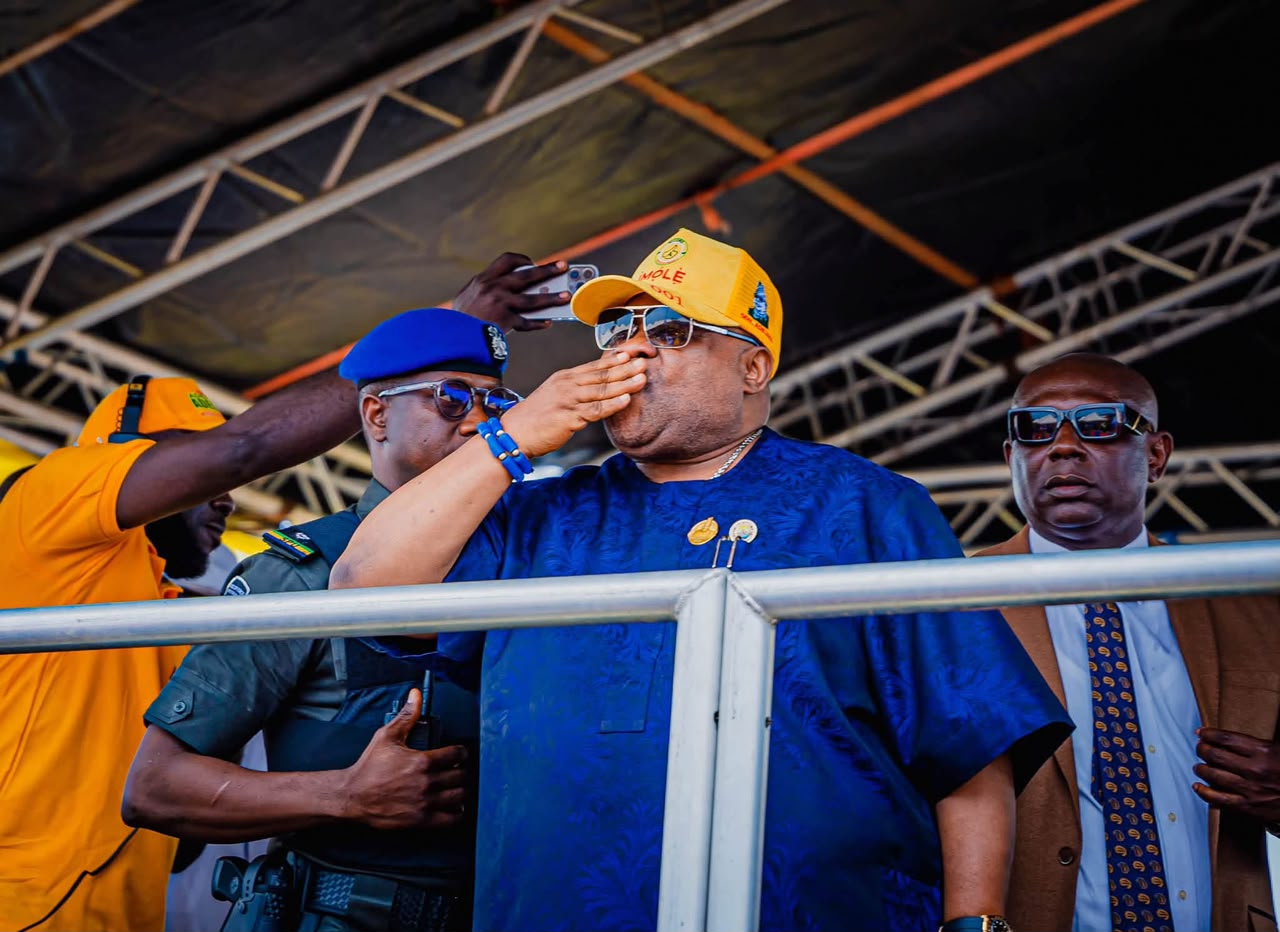
By James Bamgbose
It has been a while since I last dipped my pen into the ink of public commentary. This is not because there is nothing to write about. Far from it. Osun has never been short of events, political intrigues, governance conversations, controversies, and characters capable of keeping writers awake through the night. But sometimes, the loudest moments demand silence, not the silence of indifference, but that of careful observation.
As Osun approaches the August 15 governorship election, I have chosen to watch closely, listen patiently, and examine the unfolding events deeply in our dear state. Beyond the noise of campaign rallies, the thunder of political promises and the daily exchange of accusations, there is a larger story begging to be told: the story of an administration that has governed through resistance, survived calculated political storms and continued to enjoy the affection of the people despite repeated attempts to weaken its foundation.
This is the story of Osun’s Divine Goalkeeper. The journey did not begin yesterday. It began on July 16, 2022, when the people of Osun State marched to the ballot box and spoke with a voice too loud to be ignored.
On that historic day, Senator Ademola Jackson Nurudeen Adeleke emerged victorious with more than 400,000 votes, the highest number of votes ever secured by a governorship candidate in the electoral history of Osun State.
The victory was not just an electoral triumph. It was a declaration of hope. It was the people’s verdict on the past and their investment in a future they believed could be better. Across towns and villages, from the streets of Osogbo to the communities of Ijesaland, from the ancient settlements of Ife to the farmlands of Igbomina, even inside the government house, Osun people celebrated what they considered the return of government to the people.
But victory sometimes exposes the bitterness that defeat had hidden. From that moment, those who had held Osun tightly for twelve years appeared unwilling to accept that the people had chosen a different path.
Like Pharaoh, in the days of Moses, the political oppressors of Osun seemed determined to make the journey to freedom difficult. They stopped hiding their resentment and returned in what many perceived as their full political strength, determined to frustrate the incoming administration before it even found its feet.
Shortly after the 2022 governorship election, the outgoing administration took action that raised serious questions about its intentions toward the government that would succeed it. The hurried conduct of the local government election became one of the most controversial developments of that period. Thousands of workers were reportedly recruited into the civil service without being issued formal employment letters, creating uncertainty and potential financial burdens for the incoming government.
Even more troubling was the failure to establish a transition committee, a mechanism that should ordinarily ensure a smooth transfer of information, responsibilities, and institutional knowledge from one administration to another.
Government is not a private estate whose keys can be hidden because a new tenant is coming. Government belongs to the people, and every administration holds power only in trust. A transition process is not a favour to an incoming governor; it is a responsibility to the state.
Yet, rather than inherit a smooth road, Governor Adeleke appeared to inherit a field filled with political stones.
The expectation in their quarters may have been that the new government would stumble. Perhaps they believe that the weight of inherited challenges would overwhelm the administration, frustrate its early days, and cause the people to question the choice they made on July 16.
But the calculations did not produce the expected result. Through calmness, political wisdom, and a determination to fulfil his promises, Governor Adeleke navigated the early obstacles and delivered a remarkable first 100 days in office. Roads were constructed and rehabilitated. Public infrastructure received attention. Workers’ welfare became a priority. Governance returned to communities that had waited for years to feel the presence of government.
The achievements of the first 100 days did more than earn applause. They compelled many Osun people to ask difficult questions about the twelve years that preceded the Adeleke administration.
If so much could be achieved within 100 days, what had prevented similar progress over twelve years? That question was uncomfortable to answer.
But the early achievements triggered the beginning of a longer struggle. On February 17, 2025, Osun witnessed one of the most disturbing political developments in its recent history. Across the 30 local government areas and the Area Office, the court sacked Yes or No Council Members invaded the council secretariats under circumstances that generated tension, violence, and widespread concern.
Lives were reportedly lost. Properties were destroyed. Families were thrown into grief. The events raised a fundamental question: Was Osun witnessing an attempt to reclaim political control through the back door despite court rulings?
The coordinated occupation of local government councils looked like an attempt to create a parallel structure of authority and make governance difficult for the elected state government. The atmosphere was tense, and the possibility of a wider crisis was real. There were fears that the violence could provoke a major confrontation.
Perhaps the expectation was that the state government would respond with force. Perhaps those actors hoped that anger would be met with anger, violence with violence, and provocation with retaliation. Such a confrontation could have plunged Osun into chaos and created an excuse for external intervention.
Some opposition figures had openly spoken about the possibility of a state of emergency. But, a state of emergency is not a political trophy. It is a painful consequence of institutional breakdown, and no responsible leader should desire it for his people.
Governor Adeleke, however, chose wisdom. Like King Solomon, who understood that wisdom could achieve what force could destroy, the governor refused to allow provocation to dictate the direction of governance. He placed the protection of lives above political ego. He resisted the temptation to turn Osun into a battlefield.
Leadership is not always demonstrated by the strength to fight. Sometimes, it is revealed by the wisdom to prevent a fight.
The governor understood that the blood of an Osun citizen is too precious to be exchanged for political advantage. He understood that the destruction of public property would ultimately hurt the people, not the politicians who inspired the conflict.
While others appeared interested in creating a crisis, Governor Adeleke remained focused on governance. Then came another challenge, the prolonged withholding of local government allocations.
For about one year and six months, funds meant for local government administration have remained inaccessible to the elected council executives government, creating serious pressure on grassroots development and public administration. Their expectation appeared clear: starve the system of funds, weaken government operations, frustrate workers, and turn the people against the administration.
But once again, the political calculation did not produce the desired outcome. Government did not collapse. The governor did not abandon the people. Road projects continued. Infrastructure development moved forward. Workers continued to receive attention. Communities continued to experience the presence of government.
Despite financial constraints, Governor Adeleke continued to find ways to sustain governance and protect the interests of the people. The strategy of creating hardship to manufacture public anger did not achieve its intended result.
Instead, the love of the people for Governor Adeleke grew wider and stronger. The story brings to mind the biblical account of Haman and Mordecai.
Haman was consumed by hatred. He prepared a gallows for Mordecai, believing that the man he despised would perish on the instrument of his own design. But the story ended differently. The pit dug for another became the destination of the person who dug it.
Politics has a similar lesson. Those who build obstacles for others must remember that roads have two directions. Those who dig political pits must understand that the ground does not reserve its depth for one person alone.
Time and again, actions designed to weaken the Adeleke administration have appeared to strengthen the bond between the governor and the people. Attempts to distract him have made him more focused. Efforts to isolate him have drawn more people to him. Plans designed to reduce his popularity have, in many cases, reminded Osun people why they elected him.
Then came the attempts to ensure that Governor Adeleke would not appear on the ballot.
The journey toward the August 15 election has not been without legal, political, and institutional battles. There have been attempts, controversies, and calculations aimed at questioning or complicating the governor’s political future.
But every time a door appeared to be closing, another one opened. Every time a political obstacle emerged, a path appeared. Every time the opposition celebrated what it considered a setback, events unfolded in ways that kept Governor Adeleke firmly in the race.
Perhaps this is why the governor’s political journey can be described as one protected by divine providence.
In football, a goalkeeper is the last line of defence. When defenders are beaten, when attackers break through and when the goal appears exposed, the goalkeeper stands between defeat and survival.
But not every goalkeeper saves every shot. Some goals are protected by skill. Some are protected by strategy. Some are protected by teamwork.
But there are moments when a goalkeeper makes a save so unexpected that even the opposing team begins to wonder whether an invisible hand is standing behind the goalpost.
Osun appears to have such a goalkeeper. Governor Ademola Jackson Nurudeen Adeleke has faced political attacks, legal challenges, financial restrictions, institutional resistance, and repeated attempts to distract his government. Yet, through every storm, he has remained standing.
The goalpost has been attacked from different directions, but the ball has not entered. The defenders have been challenged, but the goalkeeper has remained alert.
The crowd has watched several difficult moments, but the final whistle has not sounded. Perhaps the secret is not merely political strength. Perhaps it is not only the goodwill of the people.
Perhaps it is not simply the governor’s calm disposition, political wisdom, or commitment to service. Perhaps there is something greater.
Perhaps Osun is witnessing the hand of divine protection over a government elected by the people and sustained by their continued confidence.
The history of nations teaches that leaders rise and fall, political parties gain and lose power, and those who appear invincible today may become distant memories tomorrow. But when a leader understands that power belongs to God and that leadership is a responsibility to the people, governance becomes more than politics.
Governor Adeleke has repeatedly demonstrated that he would rather build than destroy, unite rather than divide and govern , and engage in endless political warfare.
His administration has faced hurdles that could have overwhelmed a less patient government. Yet, Osun has continued to move forward.
The roads are speaking. The workers are speaking. The communities are speaking. The projects are speaking. Above all, the people are speaking.
As August 15 approaches, Osun people must look beyond propaganda, political bitterness, and the noise of those who seek to rewrite recent history. They must ask who has governed with compassion, who has protected the peace of the state, and who has demonstrated a commitment to development despite the obstacles placed on his path.
The election will not merely be a contest between political parties. It will be a decision about the direction of Osun.
Will the state continue on the path of peace, infrastructure, workers’ welfare, and people-centred governance?
The answer belongs to the people. But one fact has become difficult to ignore. The attacks have come. The storms have risen. The political balls have been kicked toward the goal. Yet, Osun’s goalpost remains protected.
Perhaps this is why every attempt to bring down the government has only strengthened the governor’s connection with the people.
Osun truly has a Divine Goalkeeper. The goalpost is protected. The goalkeeper is standing. And the Divine Hand remains upon Osun.
James Bamgbose writes from Igbajo, Boluwaduro Local Government Area of Osun State.