
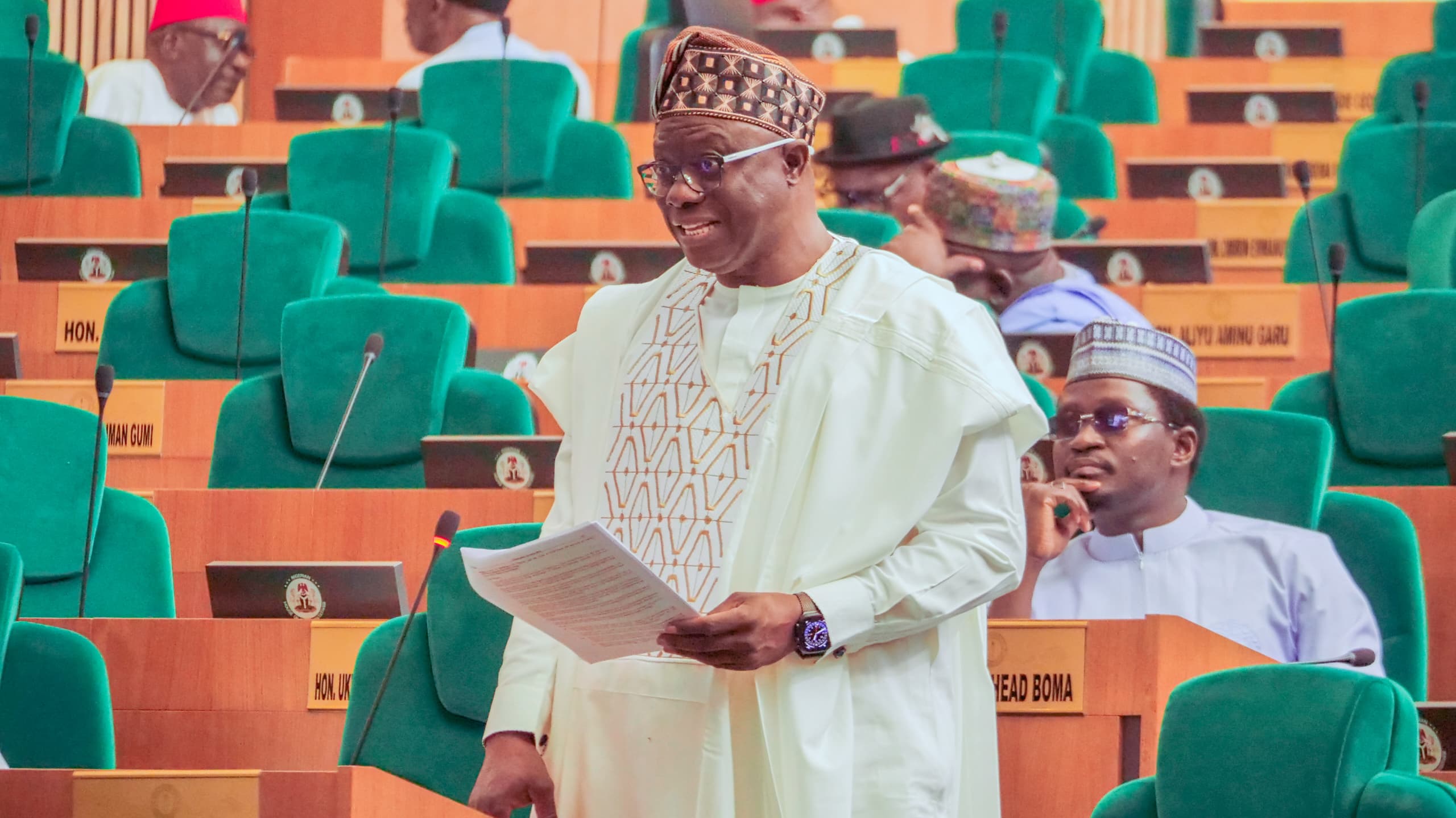
The House of Representatives has called on the Federal Government to urgently develop and implement sustainable agricultural price stabilisation policies and frameworks aimed at protecting farmers’ investments and safeguarding national food security.
The resolution followed the presentation of a Motion of Urgent Public Importance sponsored by the lawmaker representing Ede North, Ede South, Egbedore and Ejigbo Federal Constituency of Osun State at the National Assembly, Rep. Bamidele Salam and seconded by Hon. Kabiru Amadu Mai-Palace from Zamfara State, raising concerns over the sharp and persistent decline in the prices of farm produce across the country.
Presenting the motion titled, “Need to Develop Sustainable Agricultural Price Stabilisation Policies and Frameworks to Protect Farmers’ Investment in Nigeria”, Salam warned that the trend poses a significant threat to farmers’ livelihoods and Nigeria’s broader economic stability.
After the motion was seconded and unanimously agreed on, lawmakers emphasised the need for long-term reforms to address the crisis in the agricultural sector.
The House accordingly resolved to urge the Federal Government, through the Federal Ministry of Agriculture and Food Security, to urgently design and implement remedial measures, including the establishment of structured off-taking arrangements and price support mechanisms, to cushion the adverse effects of the sharp decline in farm produce prices on Nigerian farmers.
It also mandated the House Committee on Agricultural Services to investigate the underlying causes of the persistent drop in farm produce prices, assess its impact on farmers’ livelihoods, food security and national nutrition, and report back within two weeks with actionable recommendations.
In addition, the lawmakers urged the Ministry, in collaboration with relevant agencies, to strengthen storage, processing, and market access infrastructure, including expanding strategic grain reserves and agro-processing zones, as part of efforts to mitigate post-harvest losses and stabilise prices.
The House further called on the Federal Government to develop sustainable agricultural price stabilisation policies and frameworks that will protect farmers’ investments, enhance productivity, and guarantee fair returns on agricultural produce.
The motion earlier presented reads: “Notes that agriculture remains a critical pillar of Nigeria’s economy, providing employment, sustaining livelihoods, and serving as a major contributor to the GDP, national food security, and rural development.
Also Notes the recent and persistent sharp decline in the prices of farm produce across several parts of the country, particularly affecting staple crops and perishable agricultural commodities such as Cassava, Rice, Yam amongst others.
Observes that this drastic fall in prices has resulted in monumental financial losses to farmers, many of whom invested heavily in inputs such as seeds, fertilisers, agrochemicals, transportation, and labour, often financed through loans and cooperative schemes.
Also Observes that the absence of structured off-taking mechanisms, inadequate storage facilities, weak agro-processing capacity, and poor market linkages have exacerbated post-harvest losses and deepened farmers’ vulnerability to market fluctuations.
Concerned that if this trend is not urgently addressed, it may discourage future agricultural investments, reduce farm productivity, and trigger widespread disinterest in farming activities among rural populations.
Worried that the continued decline in farmgate prices, if unchecked, poses a serious threat to national food security, as reduced production cycles and huge losses may ultimately lead to food shortages, inflationary spikes, and increased dependence on food imports.
Cognizant that the implications extend to national nutrition outcomes, as disruptions in agricultural production and supply chains may limit access to affordable and nutritious food, thereby worsening malnutrition and food insecurity, particularly among vulnerable populations.
Acknowledges the strategic role of government intervention through price stabilization mechanisms, off-taking, buffer stock programs, and structured commodity off-taking systems in cushioning farmers against market volatility”.