

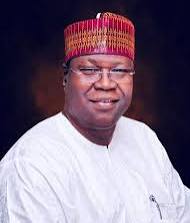
By Bashir Maidugu
As Nigeria marks Democracy Day and commemorates three years of the administration of President Bola Ahmed Tinubu, GCFR, it is fitting to reflect on the journey so far and the enduring promise of the Nigerian nation through the lens of the Tinubu-Shettima leadership.
Democracy Day is more than a celebration of constitutional governance. It is a reaffirmation of the resilience of the Nigerian people, their faith in democratic institutions, and their collective determination to build a more prosperous, united, and secure nation. It is also an opportunity to assess our progress, acknowledge our challenges, and renew our commitment to the ideals of nation-building.
In the complex theatre of Nigeria’s national life, few public officials articulate the aspirations, realities, and possibilities of the Nigerian project with as much clarity and conviction as Vice President Kashim Shettima, GCON. Yet, his reflections on the nation’s future are best understood within the broader context of the transformative vision of President Bola Ahmed Tinubu, whose administration has embarked on an ambitious programme of reforms aimed at repositioning Nigeria for sustainable growth, prosperity, and global relevance.
As Vice President and one of the principal architects of the Renewed Hope Agenda, Shettima’s perspectives mirror the President’s enduring belief that Nigeria is not a nation defined by its challenges but by its immense potential. Together, they see a country blessed with abundant human and natural resources, a nation whose greatest strength lies in the resilience, creativity, and enterprise of its youthful and diverse population.
Three years into this administration, that conviction continues to guide policy and action. Across the country, from the commercial dynamism of Lagos, to the agricultural heartlands of Benue and Niger, the industrial centres of Kano, and the emerging innovation ecosystems of Abuja, the administration has sought to unlock opportunities and expand economic possibilities.
Whether engaging local stakeholders, global investors, development partners, or diplomatic missions, Vice President Shettima consistently echoes the President’s belief that with the right policies, institutions, and investments, Nigeria can become one of the world’s most compelling success stories.
At the same time, neither President Tinubu nor Vice President Shettima is under any illusion about the magnitude of the challenges confronting the nation. The administration has openly acknowledged the structural constraints accumulated over decades, including infrastructure deficits, insecurity, fiscal pressures, unemployment, and governance inefficiencies. Their approach is rooted in the understanding that sustainable progress requires difficult but necessary reforms, implemented with courage, discipline, and consistency.
The past three years have therefore been characterised by bold policy choices aimed at laying the foundation for long-term prosperity, where data from the multilateral agencies including the World Bank, IMF and the AfDB point to a sustainable 4%+ economic growth for the rest of the year. The year 2027 might even exceed this prediction.
Central to this vision is economic transformation driven by the private sector. President Tinubu’s reform agenda seeks to move Nigeria from a consumption-oriented economy to one anchored on production, industrialisation, value addition, and export competitiveness. In articulating this agenda, Vice President Shettima has consistently emphasised the importance of strengthening agricultural value chains, revitalising manufacturing, attracting investment, and positioning Nigeria to take full advantage of the African Continental Free Trade Area (AfCFTA). His advocacy for public-private partnerships reflects the administration’s commitment to mobilising private capital and expertise in addressing the nation’s infrastructure needs. His passionate support for the African Development Bank-led Special Agro-Industrial Processing Zones (SAPZs) programme exemplifies this vision of inclusive economic growth and food security.
Human Capital Development occupies an equally prominent place in the administration’s priorities. Both President Tinubu and Vice President Shettima recognise that no nation can rise above the quality of its people. Investments in education, healthcare, skills development, innovation, and technology are therefore viewed not merely as policy choices but as strategic national imperatives. The administration’s focus on empowering Nigeria’s youthful population reflects a shared belief that the country’s demographic advantage can become one of its greatest assets in the twenty-first century.
Leadership, in the philosophy of both men, carries profound moral and strategic responsibilities. Shettima’s emphasis on fiscal discipline, transparency, accountability, and empathy reflects the values underpinning President Tinubu’s approach to governance.
His experience in navigating complex challenges, particularly during his tenure as Governor of Borno State and now as Vice President, has reinforced his appreciation for leadership that combines firmness with compassion, a quality that remains central to the administration’s efforts to balance reform with social protection.
National unity also occupies a special place in their vision for Nigeria. In a country blessed with remarkable diversity. Shettima’s frequent calls for understanding across ethnic, religious, and regional lines are a natural extension of the administration’s commitment to building a nation where diversity serves as a source of strength rather than division. Their message remains clear: the Nigerian project can only succeed when every citizen sees himself or herself as a stakeholder in a shared national destiny. It is their belief that merit should occupy a central position to achieve results.
Beyond Nigeria’s borders, the administration envisions a country that occupies its rightful place as a leading force in Africa and an influential voice in global affairs. Vice President Shettima’s engagements on regional integration, trade expansion, energy transition, and strategic partnerships reflect President Tinubu’s determination to position Nigeria as a continental leader capable of shaping economic and diplomatic outcomes across Africa and beyond. The President’s interventions at the United Nations General Assembly and other international fora continue to reinforce this aspiration.
Ultimately, Vice President Shettima’s reflections on Nigeria’s promise and challenges are inseparable from the larger vision of President Bola Ahmed Tinubu. They converge on a simple but profound proposition: that Nigeria’s future will be determined not by circumstance, but by choices,choices rooted in courage, reform, discipline, innovation, and an unwavering commitment to the common good.
As we commemorate Democracy Day and reflect on three years of the Tinubu administration, there is every reason for cautious optimism. The journey of reform is rarely easy, and nation-building is never an overnight enterprise. Yet history teaches us that enduring progress often emerges from periods of difficult but purposeful transformation.
In this regard, Vice President Shettima serves not only as an advocate of the Renewed Hope Agenda but also as one of its most eloquent interpreters. Together, President Tinubu and Vice President Shettima present a vision of a Nigeria where hope is not merely a slogan but a strategy; where reform is not an event but a process; and where national greatness is not a distant dream but an achievable destination.
That, perhaps, is the enduring message of the Tinubu-Shettima administration on this Democracy Day: a steadfast belief that despite its challenges, Nigeria possesses all that is required to achieve lasting greatness. The task before us is to remain united, committed, and faithful to the democratic ideals that continue to guide our national journey even in difficulty.
God Bless the Federal Republic of Nigeria.
Barrister Bashir Maidugu is the Senior Special Assistant to the President in the Office of the Vice President on Legal and Compliance.